
PowerMode
Vibration Response Analysis done right

PowerMode®
Power Spectrum Vibration Response Analysis with Normal Modes
Think it. Analyze it.
PowerMode computes the steady state forced vibration response of a flexible structure using Finite Element Normal Modes, from user-specified disturbance input locations to performance response locations, with distributed and localized dissipation, under applied disturbance spectra. A highly intuitive point and click format allows the analysis to be defined with the speed of thought, where the optimized numerical engine completes in less time than it takes to brew a cup of coffee. The response is saved to a MathWorks® MATLAB® MAT-file for post-processing.
PowerMode accepts disturbances as frequency domain power spectra, or as tones generated by spinning or reciprocating mechanisms at harmonics of the spin rate. Gyroscopic moments are supported.
Dissipation is included via constant modal damping, a modal damping vector, all the way to fully coupled viscous and structural damping,
Modeshape amplitude error is accommodated using a multiplicative Model Uncertainty Factor (MUF).
The response of interest is often a weighted function of the motion of the response across the structure, which can be expressed as NASTRAN format Multi-Point Constraints (MPCs). An example is an optical response such as Line of Sight (LOS) error, which is created by the motions of all of the optics in the optics train. In this case a Linear Optical Model (LOM) can be computed using ray tracing in optical modeling software and written as an MPC.
Vibration response analysis is used across industries:
automotive – noise, vibration, and harshness
civil engineering – seismic response
consumer products – appliance noise control
aviation – cabin noise reduction
spacecraft – flight vibration response analysis, also referred to as microvibration or spacecraft jitter analysis when applied to optical responses
machining operations – cutting tool chatter minimization
PowerMode requires:
Normal Mode input data from a Finite Element modeling package. Currently NASTRAN files are read natively, and modes from other FE packages can be provided as MAT-files.
MATLAB is required for post-processing the response, and for reading certain input file formats.
Runs on Microsoft Windows.
IMPORTANT:The Customer must comply with all applicable laws and regulations with regard to economic sanctions, export controls, import regulations, restrictive measures, and trade embargoes, including those of the European Union and the United States (“Export Control Laws”). The Customer agrees that it will not download or otherwise export or re-export PowerMode or any related technical data directly or indirectly to any person targeted by Export Control Laws. Nor will the Customer download or otherwise use PowerMode for any end-use prohibited or restricted by Export Control Laws.
Featured Products
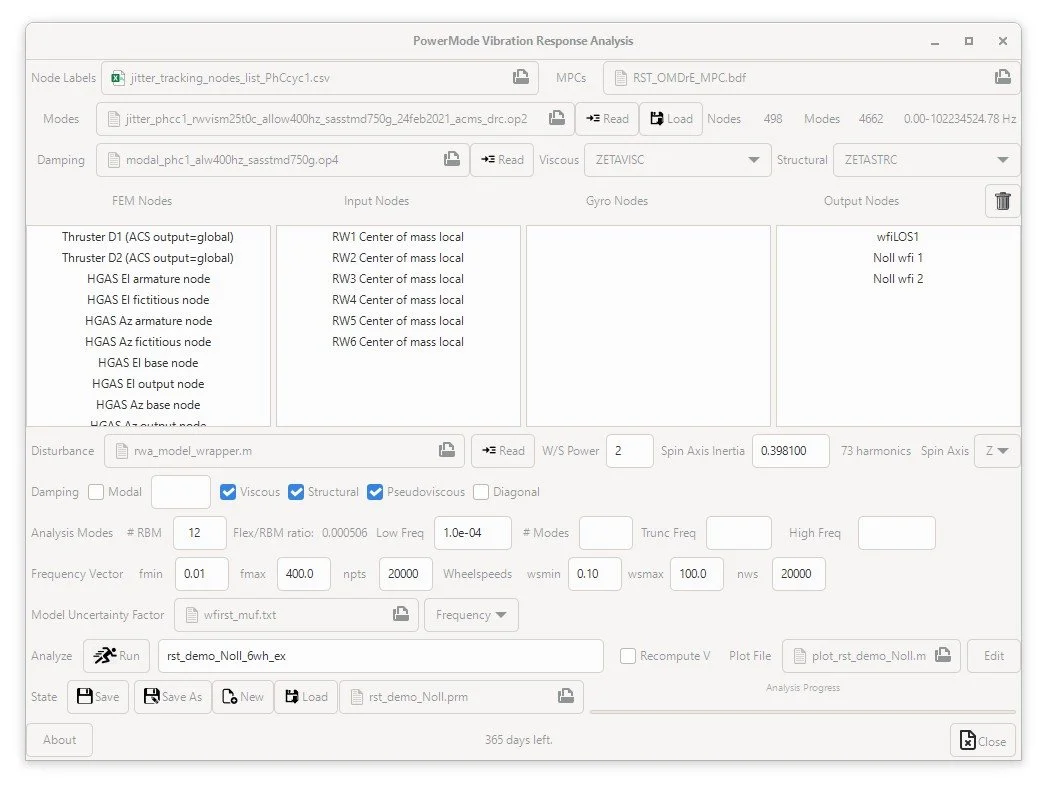
PowerMode
$999 per seat per year

Tonal Disturbance Model Development
Coming soon
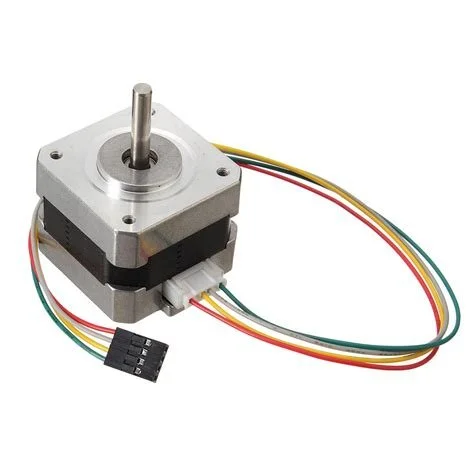
Stepper Motor Simulation
Coming soon
IMPORTANT: The Customer must comply with all applicable laws and regulations with regard to economic sanctions, export controls, import regulations, restrictive measures, and trade embargoes, including those of the European Union and the United States (“Export Control Laws”). The Customer agrees that it will not download or otherwise export or re-export PowerMode or any related technical data directly or indirectly to any person targeted by Export Control Laws. Nor will the Customer download or otherwise use PowerMode for any end-use prohibited or restricted by Export Control Laws.
Post-Processing MATLAB Toolbox
Coming soon